Dental Assisting Schools Atlanta: A Real Beginner’s Guide to Getting Started
Thinking about a career in dental assisting but not sure where to begin?
That feeling is completely normal. Most people entering this field come from different backgrounds, some switching careers, some fresh out of high school, and some just looking for something stable, well-paying, and genuinely meaningful.
Dental Assisting Schools Atlanta gives beginners a structured, practical path into one of the fastest-growing healthcare roles in Georgia. And the good news? The timeline is shorter than most people expect. Be fully trained within months instead of years.
Here’s what the journey actually looks like.
What to Expect When Starting Dental Assisting School
Walk into any dental assisting program for the first time, and two things become clear pretty quickly.
First, there’s more to learn than expected. Second, it moves faster than a traditional college program.
Most Atlanta dental assisting programs run anywhere from 10 to 16 weeks for accelerated formats. Full certificate programs at community colleges typically run for one year. Neither option requires a prior medical background to get started, just a high school diploma or GED and a genuine interest in working with people.
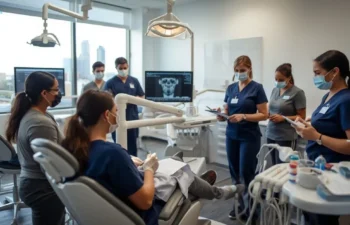
Classes usually cover a mix of clinical knowledge and hands-on practical skills from day one. Nobody spends three months in a lecture hall before touching equipment. That balance of theory and doing is one of the things that makes dental assisting programs work well for people who learn better by doing.
Essential Skills Every Dental Assistant Needs to Build Early
There’s a version of this career path that gets oversimplified. Handing tools to the dentist is just one aspect of the role. But only a small part.
The skills that actually make a strong dental assistant, and the ones that effective programs build from the ground up, go much further.
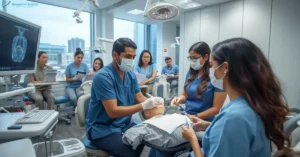
Clinical skills come first. Sterilizing instruments properly. Setting up and breaking down operator rooms. Exposing dental X-rays accurately. Taking Impressions. Assisting during procedures without getting in the way and without missing a cue.
Patient communication is just as important. Patients are often anxious. A dental assistant who can read that, adjust their tone, explain what’s happening clearly, and make someone feel genuinely comfortable changes the entire experience. That skill doesn’t come from a textbook alone; it develops through repetition and real patient interaction.
Attention to detail shows up everywhere. Charting treatment notes accurately. Tracking inventory. Following infection control protocols without shortcuts. These are the things that separate a good dental assistant from a great one.
Technology comfort is increasingly non-negotiable in a modern dental office in Atlanta. Digital X-ray units, 3D intraoral scanners, and electronic health record systems are standard equipment in forward-thinking Atlanta practices now. Getting familiar with them during training is a genuine advantage.
Understanding the Curriculum at Atlanta Dental Assisting Programs
Different programs cover the same core ground; they just package it differently.
Foundational dental sciences come first. Tooth anatomy. Oral pathology basics. Understanding procedures well enough to anticipate what the dentist needs before being asked.
Infection control and sterilization get dedicated attention. This isn’t optional knowledge; it’s a legal and ethical responsibility. Georgia state requirements around sterilization standards are specific, and programs address them directly, ensuring that all healthcare professionals are trained to meet these legal and ethical responsibilities effectively.
Radiography is one of the most hands-on components. Taking X-rays correctly requires a certification in Georgia. Good programs get students through that certification as part of the curriculum rather than leaving it as a separate step after graduating.
Chairside assisting is where classroom knowledge meets clinical reality. Working alongside a provider, managing instruments, and keeping a patient comfortable—this is the part that either confirms the career choice or redirects someone early.
Administrative basics round out most programs. Scheduling, patient records, basic billing concepts:. Not every dental assistant ends up doing front desk work, but understanding how a dental office in Atlanta runs as a whole makes anyone more valuable to a team.
Tips That Actually Help in Dental Assisting School
A few things make a genuine difference between struggling through a program and genuinely thriving in it.
Show up prepared, not just present. Reading ahead before each class means time in the lab gets used better. Questions become more specific. Skills build faster.
Practice the hands-on components outside of scheduled lab time. Any program worth attending gives students access to practice time. Use it. Confidence with instruments and equipment only comes through repetition.
Ask questions without embarrassment. Every experienced dental assistant has a list of things they wish they’d asked earlier. The training environment is specifically designed for asking those questions. Take advantage of it.
Pay attention to how experienced assistants interact with patients. Not just what they do technically, but how they handle a nervous patient, how they communicate delays, and how they close an appointment in a way that makes the person want to come back.
Start Your Career Today
Join top Dental Assisting Schools in Atlanta and get job-ready in months, not years.
Internship and Real-World Experience in Atlanta
This part of dental assisting education doesn’t get enough attention, and it’s arguably where the career actually starts.
Most quality dental assisting programs in Atlanta include a clinical externship component. This places students in working dental practices to complete supervised hours alongside licensed providers.
Atlanta is genuinely well-positioned for this. The metro area has a large concentration of dental group practices, private offices, and specialty clinics, meaning externship placements cover a range of real environments.
For anyone interested in a career dental assistant Atlanta path that leads somewhere fast, this hands-on phase matters enormously. It builds the professional network, the clinical confidence, and the practical reference points that make a first job application competitive.
Some Atlanta programs maintain direct relationships with dental practices that recruit from their graduates. That pipeline from school to dental clinic jobs in Atlanta is worth asking about specifically when evaluating programs.
Working with practice leaders and dentists like Dr. Dipesh Patel and similar clinicians in the Blueprint Smiles network gives graduates first-hand exposure to how high-performing dental teams operate and what a dental assistant career trajectory in Atlanta can realistically look like over time.
Conclusion
Starting out in dental assisting feels like a lot to take in at first. The terminology is new. The clinical environment is different from anything most people have experienced before. The pace moves quickly.
But it clicks. Faster than expected, usually. And when it does, when the hands-on skills start feeling natural and the patient interactions start flowing, it becomes clear why so many people find this career genuinely rewarding.
Atlanta is one of the best cities in the country to build this career. The practices are growing. The demand is real. And the right training program makes all the difference.
Ready to take the first step toward a dental assisting career in Atlanta? Blueprint Smiles and its connected dental assisting school offer the training, the mentorship, and the direct pathway into a practice where growth is built into the culture from day one.
FAQs
1. What are the best dental assisting schools in Atlanta, GA, for beginners?
Top dental assisting schools in Atlanta offer accredited certificate programs combining classroom instruction with clinical externships. Look for programs with radiography certification included, strong job placement partnerships, and connections to established dental office practices in Atlanta for real-world training.
2. How long does it take to complete a dental assisting program in Atlanta?
Most accelerated dental assisting programs in Atlanta take 10 to 16 weeks to complete. Traditional certificate programs run approximately one year. Neither requires prior healthcare experience, just a high school diploma and a commitment to hands-on learning from day one.
3. How do you get dental experience before landing your first job?
The best way to get dental experience is through a clinical externship included in a dental assisting program. Volunteering at a dental clinic, shadowing a working assistant, or applying for entry-level dental clinic jobs Atlanta practices also offer strong starting points for building practical skills.
4. What does a career dental assistant in Atlanta actually earn?
A career dental assistant in Atlanta can expect starting pay between $18 and $25 per hour depending on experience and the practice. With additional certifications, expanded duties, and time in a growth-oriented dental group, earning potential increases significantly alongside career advancement opportunities.
5. How do dental assistants grow into dental hygienist roles?
Growing from dental assistant to hygienist requires completing an accredited dental hygiene program, typically two years at a community college. Many dental assistants use their clinical experience and provider relationships, built in places like a Blueprint Smiles dental office in Atlanta, to apply with a strong practical foundation already in place.
Posted on behalf of
Phone: 678-288-4928